
Situation
The sales journey crossed too many handoffs
Marketing captured source and campaign context. Typeform held qualification answers. Calendly knew about bookings, Zoom knew about calls, and spreadsheets tried to carry outcomes, payments and team compensation. Each tool held a valid fragment, but no one worked from the whole record.
That mattered most at the handoffs: marketing to setter, setter to closer, closer to follow-up, and sale to payment. A lead could exist everywhere and still have no clear owner or next action.
Operators need to know what must happen today: which new lead needs contact, which self-booked call needs confirmation, who missed a call, whose follow-up is due and what context the closer needs before joining Zoom.
What we built
The shared operating record for every lead
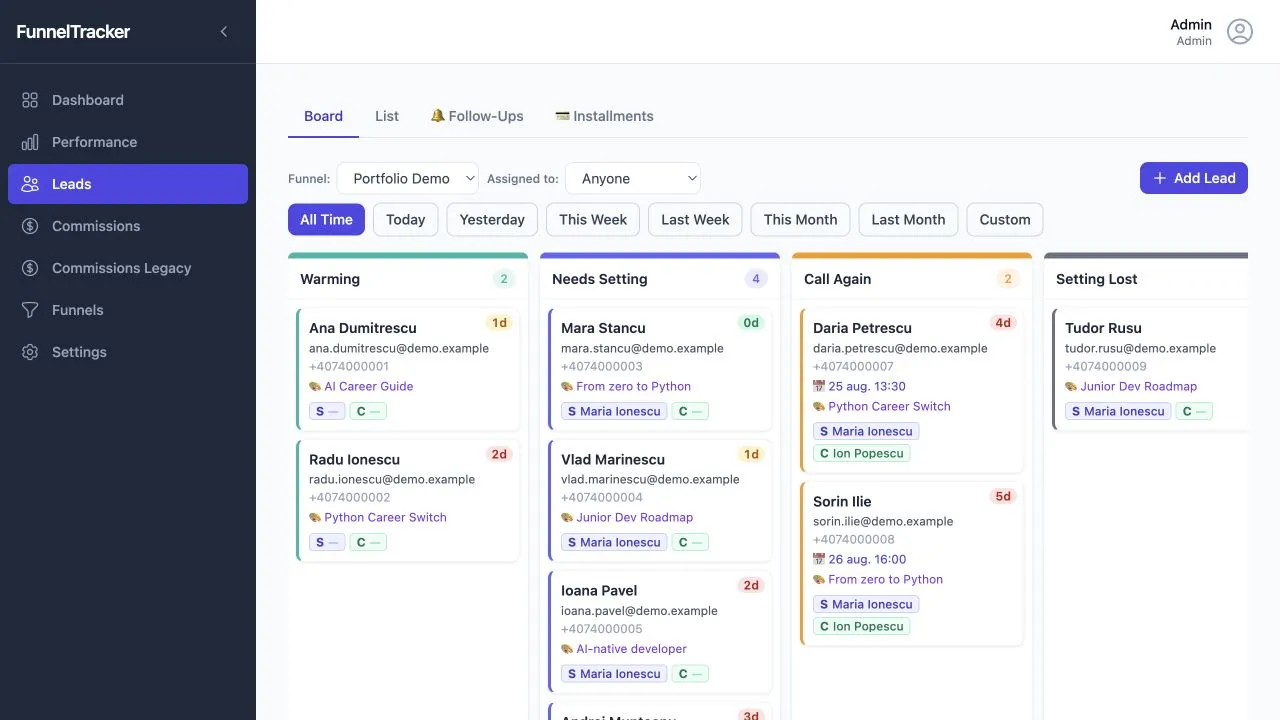
FunnelTracker is organized around action. The board tells the team where a lead is; the opened lead explains why and exposes the work that should happen next.
- Lead board and list views with explicit stages and follow-up queues.
- Setter and closer assignment with ownership visible on the record.
- Campaign, creative and Typeform context carried into the sales conversation.
- Call booking, self-booked confirmation, rescheduling, no-show and follow-up actions.
- Notes, outcomes, activity timeline, Zoom review and AI-assisted call review.
- Payments, instalment schedules, commission rules and payouts after the sale.
- Meta, Typeform, Calendly and Zoom integrations.
How it works
Capture, route, work, settle
- Capture Meta and Typeform context lands on the lead record instead of beginning another spreadsheet row.
- Route The lead gets a stage, an owner and the right next action; self-booked calls are surfaced for confirmation.
- Work Setters and closers share answers, bookings, notes, outcomes, follow-ups, Zoom review and a full timeline.
- Settle A sale continues into payments, instalments, commissions and payouts without leaving the operating record.
Evidence
The board and lead details work as one
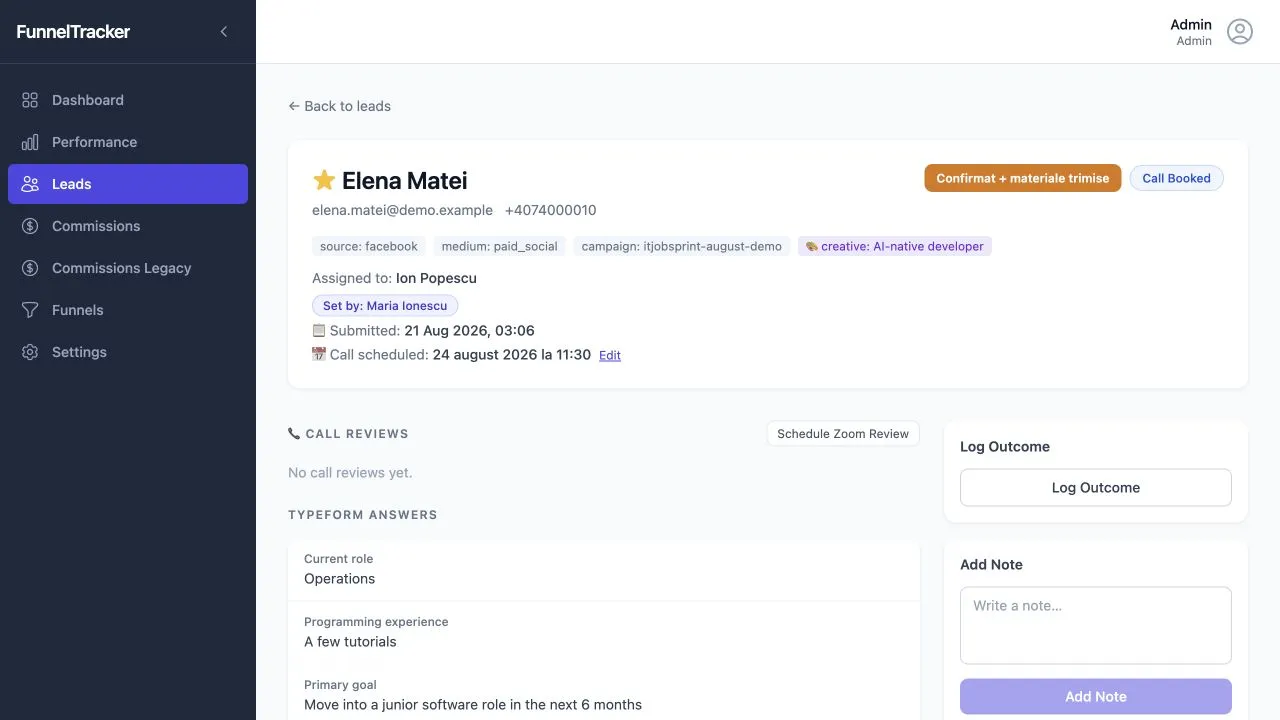
The board shows the operating pipeline, while Lead details brings source, assignments, call information, qualification answers, notes and activity into one workspace.
Operators get the next action without losing the history behind it, and managers can inspect the same record instead of reconstructing it across separate tools.
Because VM Codes runs on FunnelTracker, its trade-offs are tested in daily work: clear queues, explicit ownership and context kept close to the decision.
- Every lead has a visible stage, owner and next action.
- Setters and closers work from the same campaign, qualification and activity context.
- Self-booked calls, no-shows and due follow-ups surface as operator work rather than report rows.
- The operating record continues through payments, instalments, commissions and payouts.
Our role
Who built it
FunnelTracker is production software built by VM Software Lab for VM Codes, a business in the same ownership group. It is used in daily operations rather than presented as an external client engagement.